
In light of CFROG’s 10th anniversary, we’re celebrating a win that demonstrates our mission and commitment to fighting for clean land, air, and water in allyship with environmental justice. Back in 2018, as part of CFROG’s watchdogging efforts, we discovered a request from Peak Operator to drill 79 new tar sands oil wells in the Oxnard Plain – which was met with an overwhelming amount of community concern. One reason for concern comes from the fact that tar sands are the thickest and dirtiest form of petroleum, and require the use of cyclic steam injections to access the oil. Cyclic steam injection is very similar to fracking, but rather than injecting water to access the oil, the well is injected with steam to reduce oil viscosity and therefore make extraction easier.
CFROG video to raise community awareness on tar sands drilling (2018).
Shortly after Peak Operator’s request to drill the 79 new wells, scientists from the U.S. Geological Survey (USGS) discovered and reported evidence possibly suggesting that the groundwater wells supplying irrigation to the Oxnard Plain were being contaminated by petroleum-related substances. USGS scientist, Celia Rosecrans, detected thermogenic gasses in water wells that could be linked to the cyclic steam oil recovery operations beneath the Fox Canyon Aquifer, a major source of drinking water for thousands of Ventura County residents. In a report to the State Water Board, the hydrologist explained that the gasses could be polluting the well water or the well bores. However, in a strategic effort to cast doubt over this science, Peak Operator sparked and spread controversy around whether or not the petroleum-related gasses were caused by natural processes or by oil and gas industry operations. By challenging the validity of the USGS report, Peak aimed to avoid any delays in the permitting process and continue with business as usual, potentially polluting the water for thousands of community members and profiting at the expense of public health.
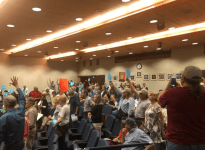
As a response to this controversy, and to protect the public’s health and safety from drinking contaminated water, former Ventura County Supervisor (now Assembly Member) Steve Bennett proposed a moratorium on new cyclic steam oil drilling projects in the tar sands, at least until the source of the gasses was identified and the presence of water contamination was confirmed or denied. In order to pass this urgency ordinance, Supervisor Bennett needed a supermajority of 4 of 5 votes, and for the board to declare the issue as a current and immediate threat to the public health, safety, and welfare of the citizens of Ventura County. CFROG organized with the community to show support for the moratorium and protect our health, land, and water. After hearing from the community, the board voted and fulfilled both needs, and the 45-day moratorium went into effect immediately.

As scientists worked to identify the source of the gasses, community awareness and concern only grew. Shortly before the 45-day ordinance would have expired, CFROG and community members gathered in the hearing room to once again show support for the ordinance, and the Board of Supervisors voted to extend the moratorium for an additional six months. This process repeated again in November 2019, when the Board unanimously voted to extend the moratorium for a year.

Between November 2019 and March 2020, after discovering a number of violations and poor management, the Board of Supervisors revoked Peak’s permit to drill the tar sands. Peak operator then attempted to appeal the permit revocation, but was again shut down by the County. In 2022, Peak operator again attempted to circumvent the Board’s decision by suing the county over the permit revocation. Again, they lost this lawsuit and were prevented from drilling the tar sands.
Unfortunately, the Peak drilling site is still a source of pollution and risk for our community. In 2014, there was a major chemical spill from the oil operations that contaminated groundwater and the surrounding agricultural fields, including exposing hundreds of farmworkers to toxic chemicals. A full clean up and remediation has still not been completed. After the issue was passed around various regulatory agencies, the Regional Water Board is now managing enforcement. But holding the oil company accountable has been difficult because shortly after losing the lawsuit against the County, the operator dissolved and went bankrupt. The 39 unplugged wells on the site were “orphaned” – i.e. left unplugged by a financially insolvent operator. On top of the contamination caused by the chemical spill, these wells have sat idle polluting the air, soil, and water for four years. The state is currently plugging these wells, but guess who is paying for it? Taxpayers.


Images from Regional Water Quality Control Board Inspection Report (2023). Image on the left: photo of observed evidence of past spills contamination on the ground surface. Image on the right: evidence of oil spillage was found on the ground to the left of the onsite drummer bins.
While the work never ends, the tar sands moratorium was a great win for Ventura County’s communities and environment. From CFROG’s watchdogging efforts, to the powerful collective action demonstrated by the community, this story reflects resilience, justice, and the need for protecting our lands, waters, and air. This story is an example of one of the rare but victorious instances where community health was put before industry wealth – something that CFROG fights for everyday.